L’Aquila 2026: a small Italian city turning reconstruction into a cultural year
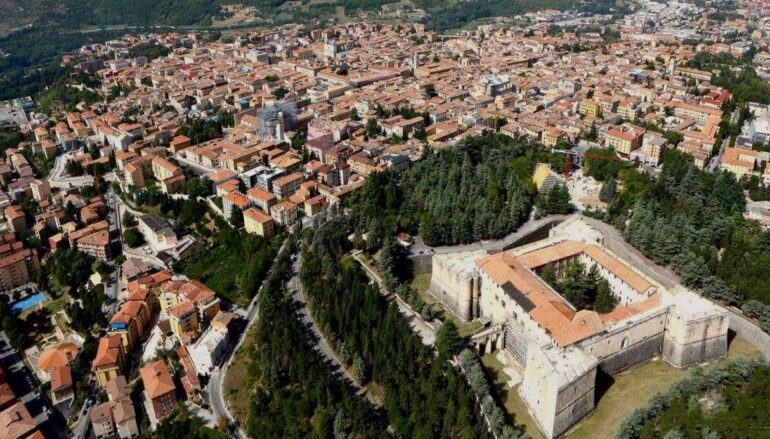
L’Aquila has spent the past decade and a half rebuilding after the 2009 earthquake. In 2026 it carries a national badge, “Italian Capital of Culture”, and an obvious question: what does a full cultural year look like in a city where public life has been under repair for years?
The organisers promise spread and scale. More than 300 appointments are planned across the year, spaced over months rather than compressed into a short festival season. The official portal, laquila2026.it, is the running timetable.
How the year starts
The opening is scheduled for today (17 January 2026). The morning is institutional, with a formal ceremony followed by a reading and a concert. The afternoon and evening shift into the historic centre with a large public event designed for streets and squares, ending with a central moment in Piazza Duomo. The intention is clear: the city is expected to act as a stage.
The winning cultural dossier is presented as a long game. The pitch is continuity: institutions, schools, associations and local communities working across the year, with visiting artists folded into an existing framework. The point is to keep the city active week after week, with fewer gaps between headline moments.
Art: a contemporary spine
Visual arts sit at the centre of the 2026 plan. MAXXI L’Aquila is positioned as a key hub, alongside a set of projects that use the city itself as subject matter: architecture, archives, photography, and site-based work that links culture to the urban fabric and its recent history.
Music runs through the year in different formats: concert seasons, participatory work, and performances that move outside traditional venues. Some projects concentrate on education and inclusion, others lean into the outdoor, city-wide format that has become a familiar solution in historic centres where space can carry the event.
A visible strand is skills and access. The programme includes initiatives aimed at professional training in the performing arts, plus education projects for children and teenagers that use artistic practice to build participation and confidence. The ambition is to leave capability behind, not just memories.
Several initiatives address identity, memory and resilience through theatre, residencies and storytelling. The language is civic as much as cultural. In a city like L’Aquila, the themes are already there; the question is whether the programme can keep them grounded in real participation.
Beyond the city limits
The 2026 framework also stretches outward through partnerships that widen the map beyond the municipality. It is presented as an inland Apennine approach, linking L’Aquila to a broader territory and a network of cultural routes.
One of the most tangible parts of the year is the gradual return of venues and symbolic spaces to public life. A cultural programme in L’Aquila is never only about the event; it is also about where it happens, and what that place has meant to the city for the last sixteen years.
A practical note for visitors
The programme evolves, so it is worth checking the official portal (and this website) regularly. The easiest way to read the year is by clusters: visual arts, music and performance, education and community projects, reopened venues. For international audiences, the story is straightforward: a year of culture inside a city rebuilding public life through shared spaces and steady participation.
In L’Aquila, culture comes with scaffolding. The 2026 title puts the city under a brighter light, then asks it to function as a city again. If the programme turns that spotlight into a steady pulse of public life, the legacy will outlast the slogan.